Поиск книг, учебников, пособий в онлайн-магазинах

Rebound effect (conservation)
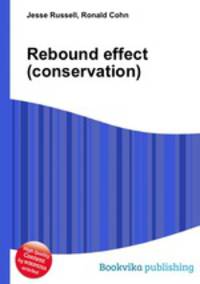
Автор: Jesse Russell,Ronald Cohn, 127 стр., издатель: "Книга по Требованию", ISBN: 978-5-5087-8932-9High Quality Content by WIKIPEDIA articles! In conservation and energy economics, the rebound effect (or take-back effect) refers to the behavioral or other systemic responses to the introduction of new technologies that increase the efficiency of resource use. These responses tend to offset the beneficial effects of the new technology or other measures taken. While the literature on the rebound effect generally focuses on the effect of technological improvements on energy consumption, the theory can also be applied to the use of any natural resource or other input, such as labor. The rebound effect is generally expressed as a ratio of the lost benefit compared to the expected environmental benefit when holding consumption constant. For instance, if a 5% improvement in vehicle fuel efficiency results in only a 2% drop in fuel use, there is a 60% rebound effect (since (5-2)?5 = 60%). The 'missing' 3% might have been consumed by driving faster or further than before. Данное издание...


Рейтинг книги:  4 из 5, 7 голос(-ов).
4 из 5, 7 голос(-ов).
Популярные книги по минимальной цене:
 83 руб.
|
 46 руб.
|
 95 руб.
|
 255 руб.
|