Поиск книг, учебников, пособий в онлайн-магазинах

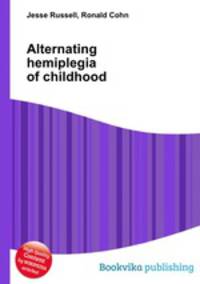
Alternating hemiplegia of childhood
Автор: Jesse Russell,Ronald Cohn, 113 стр., издатель: "Книга по Требованию", ISBN: 978-5-5085-8288-3High Quality Content by WIKIPEDIA articles! Alternating hemiplegia of childhood (AHC) is a rare neurological disorder of uncertain etiology, which is named for the transient episodes, often referred to as attacks, of hemiplegia from which those with the disorder suffer. These hemiplegic attacks can cause anything from mild weakness to complete paralysis on one or both sides of the body, and they can vary greatly in duration. Attacks may also alternate from one side of the body to the other, or alternate between affecting one or both sides during a single attack. AHC is associated with many symptoms besides hemiplegia, and the majority of these become apparent in early infancy. AHC is considered normal if symptoms are present before 18 months of age. Normally, hemiplegia and other associated symptoms cease completely with sleep, but they may recur upon waking. The disorder was only recently discovered, having first been characterized in 1971. AHC is also extremely rare – approximately...


Рейтинг книги:  5 из 5, 2 голос(-ов).
5 из 5, 2 голос(-ов).
Популярные книги по минимальной цене:
 22 руб.
|
 37 руб.
|
 113 руб.
|
 521 руб.
|