Поиск книг, учебников, пособий в онлайн-магазинах

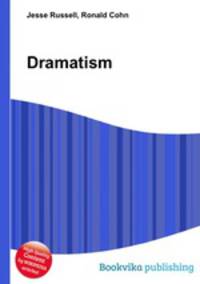
Dramatism
Автор: Jesse Russell,Ronald Cohn, 108 стр., издатель: "Книга по Требованию", ISBN: 978-5-5140-2513-8High Quality Content by WIKIPEDIA articles! Dramatism, introduced by rhetorician Kenneth Burke, made its way into the field of communication in the early 1950s as a method for understanding the social uses of language and how to encounter the social and symbolic world of a drama (Brock, Burke, Burgess, Parke, and Simons 1985). Dramatism is the belief that language is a strategic, motivated response to a specific situation (Griffin 2006). It views language as a mode of symbolic action rather than a mode of knowledge (Burke 1978). Kenneth Burke's view was not that life is like a drama, but that life is a drama: that humans by nature see and interpret situations as drama. Dramatism theory has the layout of a play, complete with agents (actors), acts (plots), scenes (settings), agencies (tools, instruments, or means) and purposes. These five elements form the dramatistic "pentad." Dramatism comprises identification, dramatistic pentad, and the guilt-redemption cycle. Данное издание...


Рейтинг книги:  5 из 5, 2 голос(-ов).
5 из 5, 2 голос(-ов).
Популярные книги по минимальной цене:
 45 руб.
|
 76 руб.
|
 131 руб.
|
 396 руб.
|