Поиск книг, учебников, пособий в онлайн-магазинах

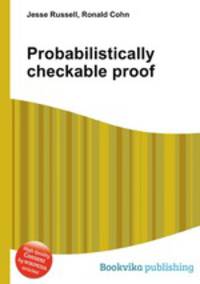
Probabilistically checkable proof
Автор: Jesse Russell,Ronald Cohn, 152 стр., издатель: "Книга по Требованию", ISBN: 978-5-5124-0521-5High Quality Content by WIKIPEDIA articles! In computational complexity theory, a probabilistically checkable proof (PCP) is a type of proof that can be checked by a randomized algorithm using a bounded amount of randomness and reading a bounded number of bits of the proof. The algorithm is then required to accept correct proofs and reject incorrect proofs with very high probability. A standard proof (or certificate), as used in the verifier-based definition of the complexity class NP, also satisfies these requirements, since the checking procedure deterministically reads the whole proof, always accepts correct proofs and rejects incorrect proofs. However, what makes them interesting is the existence of probabilistically checkable proofs that can be checked by reading only a few bits of the proof using randomness in an essential way. Данное издание представляет собой компиляцию сведений, находящихся в свободном доступе в среде Интернет в целом, и в информационном сетевом ресурсе...


Рейтинг книги:  5 из 5, 6 голос(-ов).
5 из 5, 6 голос(-ов).
Популярные книги по минимальной цене:
 126 руб.
|
 50 руб.
|
 40 руб.
|
 324 руб.
|