Поиск книг, учебников, пособий в онлайн-магазинах

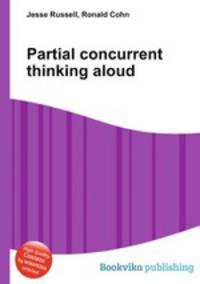
Partial concurrent thinking aloud
Автор: Jesse Russell,Ronald Cohn, 92 стр., издатель: "Книга по Требованию", ISBN: 978-5-5122-9790-2High Quality Content by WIKIPEDIA articles! Partial Concurrent Thinking Aloud (or partial concurrent think-aloud, or PCTA) is a method used to gather data in usability testing with screen reader users. It is a particular kind of think aloud protocol (or TAP) created by Stefano Federici and Simone Borsci at the Interuniversity Center for Research on Cognitive Processing in Natural and Artificial Systems of University of Rome "La Sapienza". The Partial Concurrent Thinking Aloud is built up in order to create a specific usability assessment technique for blind users, eligible to maintain the advantages of concurrent and retrospective thinking aloud while overcoming their limits. Using PCTA blind users’ verbalizations of problems could be more pertinent and comparable to those given by sighted people who use a concurrent protocol. In the usability evaluation with blind people, the retrospective thinking aloud is often adopted as a functional solution to overcome the structural...


Рейтинг книги:  5 из 5, 6 голос(-ов).
5 из 5, 6 голос(-ов).
Популярные книги по минимальной цене:
 80 руб.
|
 210 руб.
|
 117 руб.
|
 186 руб.
|