Поиск книг, учебников, пособий в онлайн-магазинах

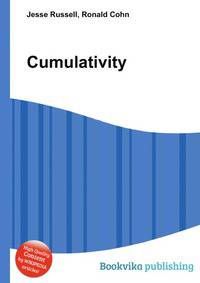
Cumulativity
Автор: Jesse Russell,Ronald Cohn, 116 стр., издатель: "Книга по Требованию", ISBN: 978-5-5114-1152-1High Quality Content by WIKIPEDIA articles! In linguistic semantics, an expression X is said to have cumulative reference if and only if the following holds: If X is true of both of a and b, then it is also true of the combination of a and b. Example: If two separate entities can be said to be "water", then combining them into one entity will yield more "water". If two separate entities can be said to be "a house", their combination cannot be said to be "a house". Hence, "water" has cumulative reference, while the expression "a house" does not. The plural form "houses", however, does have cumulative reference. If two (groups of) entities are both "houses", then their combination will still be "houses". Данное издание представляет собой компиляцию сведений, находящихся в свободном доступе в среде Интернет в целом, и в информационном сетевом ресурсе "Википедия" в частности. Собранная по частотным запросам указанной тематики, данная компиляция построена по принципу подбора близких...
| В наличии: | ||||
 |
Sprinter - 1008 руб. |
Перейти 
|
 Лучшая цена Лучшая цена
|
|
 |
Books.Ru - 1128 руб. |
Перейти
|
||
| Под заказ: | ||||
 |
OZON.ru - 1125 руб. |
Перейти
|
||
Рейтинг книги:  5 из 5, 8 голос(-ов).
5 из 5, 8 голос(-ов).
Популярные книги по минимальной цене:
 83 руб.
|
 44 руб.
|
 281 руб.
|
 89 руб.
|