Поиск книг, учебников, пособий в онлайн-магазинах

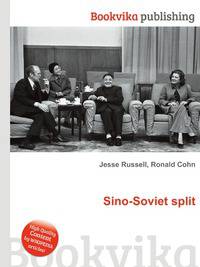
Sino-Soviet split
Автор: Jesse Russell,Ronald Cohn, 106 стр., издатель: "Книга по Требованию", ISBN: 978-5-5111-4096-4High Quality Content by WIKIPEDIA articles! In political science, the term Sino–Soviet split (1960–1989) denotes the worsening of political and ideologic relations between the People's Republic of China (PRC) and the Union of Soviet Socialist Republics (USSR) during the Cold War (1945–1991). The doctrinal divergence derived from Chinese and Russian national interests, and from the regimes' respective interpretations of Marxism: Maoism and Marxism–Leninism. In the 1950s and the 1960s, ideological debate between the Communist parties of Russia and China also concerned the possibility of peaceful coexistence with the capitalist West. Yet, to the Chinese public, Mao Zedong proposed a belligerent attitude towards capitalist countries, an initial rejection of peaceful coexistence, which he perceived as Marxist revisionism from the Russian Soviet Union. Moreover, since 1956, the PRC and the USSR had (secretly) diverged about Marxist ideology, and, by 1961, when the doctrinal differences...
| В наличии: | ||||
 |
Sprinter - 1008 руб. |
Перейти 
|
 Лучшая цена Лучшая цена
|
|
 |
Books.Ru - 1128 руб. |
Перейти
|
||
| Под заказ: | ||||
 |
OZON.ru - 1125 руб. |
Перейти
|
||
Рейтинг книги:  4 из 5, 7 голос(-ов).
4 из 5, 7 голос(-ов).
Популярные книги по минимальной цене:
 48 руб.
|
 60 руб.
|
 70 руб.
|
 354 руб.
|