Поиск книг, учебников, пособий в онлайн-магазинах

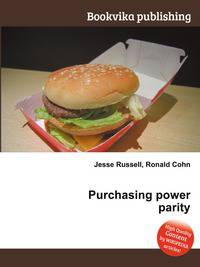
Purchasing power parity
Автор: Jesse Russell,Ronald Cohn, 96 стр., издатель: "Книга по Требованию", ISBN: 978-5-5110-9040-5High Quality Content by WIKIPEDIA articles! In economics, purchasing power parity (PPP) is a condition between countries where an amount of money has the same purchasing power in different countries. The prices of the goods between the countries would only reflect the exchange rates. The idea originated with the School of Salamanca in the 16th century and was developed in its modern form by Gustav Cassel in 1918. The concept is based on the law of one price, where in the absence of transaction costs and official trade barriers, identical goods will have the same price in different markets when the prices are expressed in the same currency. Данное издание представляет собой компиляцию сведений, находящихся в свободном доступе в среде Интернет в целом, и в информационном сетевом ресурсе "Википедия" в частности. Собранная по частотным запросам указанной тематики, данная компиляция построена по принципу подбора близких информационных ссылок, не имеет самостоятельного сюжета, не содержит...
| В наличии: | ||||
 |
Sprinter - 894 руб. |
Перейти 
|
 Лучшая цена Лучшая цена
|
|
 |
Books.Ru - 1001 руб. |
Перейти
|
||
| Под заказ: | ||||
 |
OZON.ru - 998 руб. |
Перейти
|
||
Рейтинг книги:  5 из 5, 4 голос(-ов).
5 из 5, 4 голос(-ов).
Популярные книги по минимальной цене:
 262 руб.
|
 278 руб.
|
 440 руб.
|
 335 руб.
|