Поиск книг, учебников, пособий в онлайн-магазинах

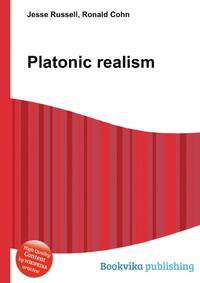
Platonic realism
Автор: Jesse Russell,Ronald Cohn, 126 стр., издатель: "Книга по Требованию", ISBN: 978-5-5110-7969-1High Quality Content by WIKIPEDIA articles! Platonic realism is a philosophical term usually used to refer to the idea of realism regarding the existence of universals or abstract objects after the Greek philosopher Plato (c. 427–c. 347 BC), a student of Socrates. As universals were considered by Plato to be ideal forms, this stance is confusingly also called Platonic idealism. This should not be confused with Idealism, as presented by philosophers such as George Berkeley: as Platonic abstractions are not spatial, temporal, or mental they are not compatible with the later Idealism's emphasis on mental existence. Plato's Forms include numbers and geometrical figures, making them a theory of mathematical realism; they also include the Form of the Good, making them in addition a theory of ethical realism. Данное издание представляет собой компиляцию сведений, находящихся в свободном доступе в среде Интернет в целом, и в информационном сетевом ресурсе "Википедия" в частности. Собранная по...
| В наличии: | ||||
 |
Sprinter - 1008 руб. |
Перейти 
|
 Лучшая цена Лучшая цена
|
|
 |
Books.Ru - 1128 руб. |
Перейти
|
||
| Под заказ: | ||||
 |
OZON.ru - 1125 руб. |
Перейти
|
||
Рейтинг книги:  4 из 5, 3 голос(-ов).
4 из 5, 3 голос(-ов).
Популярные книги по минимальной цене:
 28 руб.
|
 37 руб.
|
 60 руб.
|
 60 руб.
|